Why IAF strike on enemy surveillance plane is important
Significance of IAF downing an ELINT, AEW&C aircraft in Operation Sindoor
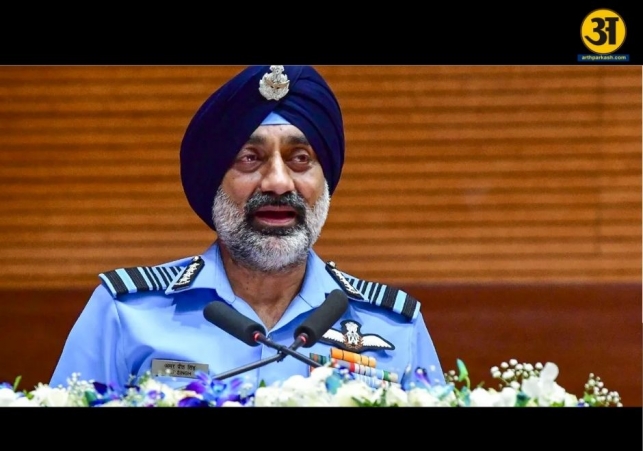
During Operation Sindoor, the Indian Air Force (IAF) achieved one of the most significant air defence victories in its history — the destruction of a large Pakistani aircraft, possibly an ELINT (Electronic Intelligence) or an AEW&C (Airborne Early Warning and Control) platform. According to Air Chief Marshal Amar Preet Singh, this was “the largest ever recorded surface-to-air kill” in terms of distance and scale.
This event is not just another military statistic. It reflects India’s growing capability to strike far into enemy territory, disrupt critical surveillance networks, and change the tempo of a conflict in its favour. For Pakistan, losing such an aircraft would be a serious operational setback.
Air Chief Marshal Singh revealed that the target was hit at about 300 kilometres away — a long-range engagement that demonstrates India’s ability to neutralise high-value airborne assets before they can influence the battlefield. He also confirmed that during Operation Sindoor, the IAF destroyed at least five Pakistani fighter jets and struck major airfields, including Jacobabad, as well as key command centres like Murid and Chaklala.
Why ELINT and AEW&C aircraft matter so much
To understand why this kill is significant, we need to know what these aircraft do.
An ELINT aircraft collects electronic intelligence. It uses specialised antennas and receivers to listen to and analyse signals from enemy radars, missile systems, and communication networks. By doing so, it maps out where the enemy’s defences are, how they are operating, and what frequencies they use. This information is vital for planning safe and effective strikes while avoiding detection.
An AEW&C aircraft, on the other hand, acts as a flying radar and control centre. With its powerful sensors, it can detect enemy aircraft, ships, vehicles, and missiles from hundreds of kilometres away. AEW&C crews can guide friendly aircraft to intercept threats, coordinate large air battles, and monitor enemy movements across a vast area.
Both ELINT and AEW&C aircraft are not just “support” planes — they are strategic assets. Without them, an air force’s ability to detect threats, coordinate responses, and conduct complex missions drops sharply.
For Pakistan, losing one of these aircraft means:
-
Reduced ability to track Indian aircraft in real time.
-
Weaker coordination between air defence systems.
-
Slower reaction times to Indian strikes.
-
Blind spots in their surveillance network.
A turning point in modern air combat
In modern warfare, information is as important as firepower. Nations that can see and understand the battlefield have a huge advantage over those that can’t. ELINT and AEW&C aircraft are at the heart of this advantage. Destroying them is not easy — they usually fly far from the frontlines, protected by fighter escorts and covered by long-range radar warning systems.
That is why the IAF’s successful strike is so noteworthy. Hitting a target like this at 300 km requires advanced radar tracking, high-precision missiles, and flawless coordination between ground-based and airborne units. It also requires confidence — because a failed attempt could expose Indian positions and waste expensive weaponry.
ALSO READ: India’s strategic options to counter Trump’s tariff pressure
ALSO READ: How Trump’s tariff tirade may be fueling a Russia-India-China troika revival | Explained
From a strategic perspective, this kill sends three clear messages:
-
India’s reach has grown – The ability to target and destroy such high-value assets at great distances means India can disrupt enemy plans even before they fully take shape.
-
Pakistan’s defences are vulnerable – If a protected asset like an ELINT or AEW&C can be taken down, it raises questions about the effectiveness of Pakistan’s escort and early-warning systems.
-
Technology and training pay off – This was not just about having the right missile; it was about having trained crews who could detect, identify, and engage the target in time.
My view: India must keep building on this success
This victory is a reminder that warfare today is about more than dogfights and bombs — it is about controlling the information space. By eliminating one of Pakistan’s eyes and ears in the sky, India has shown it can fight and win that battle.
However, this cannot be the end of the story. Pakistan will likely try to replace or upgrade its lost asset, and other adversaries will be studying what happened to avoid a similar fate. India must continue to improve its own surveillance and intelligence systems, invest in longer-range detection and strike capabilities, and train its personnel to respond quickly to new threats.
Equally important is the political message: India will act decisively against high-value targets if its security demands it. This deterrence effect can help prevent conflicts from escalating — because the enemy knows that its most prized systems are not safe, even far from the border.
Operation Sindoor’s ELINT/AEW&C kill is not just a tactical win; it’s a strategic signal. In the modern age, blinding the enemy is often the first step to victory. And in this case, the IAF has shown that it can do exactly that.
Related News